
The digital realm has ushered in a new era of entertainment, and among the most captivating offerings are online casinos. The allure of spinning reels and strategic card play, all from the comfort of your home, is undeniable. As seasoned experts in the field, we understand the nuances that separate casual players from those who consistently experience the thrill of victory.
Forget the empty promises of guaranteed riches. This isn’t about gambling miracles; it’s about understanding the odds, mastering the strategies, and approaching online table games with a calculated mindset. We’re diving deep into popular casino games like Blackjack, Poker, Baccarat, and Roulette, dissecting their mechanics and revealing the data-driven insights that can significantly improve your gameplay.
Consider this your comprehensive guide to not just playing, but winning at online table games. We’ll explore the core strategies for each game, discuss bankroll management techniques to extend your playtime, highlight common pitfalls to avoid, and emphasize the importance of responsible gambling. Get ready to transform your online casino experience from a game of chance to a strategic pursuit of enjoyment and potential profit.
The Reigning Champions: A Look at the Most Played Table Games
Step into the thrilling domain of online casinos, where the digital felt is always open and the dice never stop rolling. Among the myriad options, certain table games consistently reign supreme, captivating players with their blend of strategy, chance, and social interaction. These aren’t just games; they’re cultural touchstones, each with its own unique history and devoted following. Let’s explore the most popular table games to understand why they maintain their allure and how they appeal to different tastes.
Blackjack: The Classic Game of Skill and Strategy
Blackjack is a timeless classic celebrated for its simple rules and strategic depth. The goal is to beat the dealer by getting a hand as close to 21 as possible without going over. Players make decisions based on their hand and the dealer’s visible card, employing strategies like hitting (taking another card), standing (keeping the current hand), doubling down (doubling the bet and taking one more card), or splitting pairs. Mastering basic strategy charts is essential to decreasing the house edge. It’s a game where skill and knowledge can significantly impact the odds. Some players find that observing the dealer, keeping track of the cards dealt, and knowing when to take risks can be a rewarding experience, though it’s not always foolproof. With so many resources available, you can test many strategies to make the game enjoyable.
Roulette: The Thrill of the Spinning Wheel
Roulette is the quintessential game of chance, offering excitement with every spin. Players bet on where a ball will land on a spinning wheel with numbered pockets. Bets range from single numbers to groups of numbers, colors (red or black), or whether the number will be odd or even. Variations include European roulette (with a single zero), American roulette (with a single and double zero), and French roulette (with unique rules like “La Partage” and “En Prison”). The thrill of watching the wheel spin and the ball bounce is undeniable. The random nature of roulette makes it appealing to those who enjoy pure chance. Whether it’s the elegance of the game or the potential for a big win, roulette provides a unique adrenaline rush.
Baccarat: Elegance and Simplicity
Baccarat, long associated with high rollers, is surprisingly simple. Players bet on either the “Player” or the “Banker” hand, predicting which will have a total closest to nine. The dealer does most of the work, following a set of rules to deal additional cards. Baccarat’s appeal lies in its simplicity and speed. Betting on the banker often gives sharp players the best odds, making it the preferred choice for those in the know. It’s a game of elegance and almost pure chance, requiring little strategy but offering plenty of suspense. Despite its sophisticated image, baccarat is accessible to all levels of players, making it an intriguing option for those seeking a straightforward yet thrilling experience. One should also learn and play Dragon Bonus Baccarat to make the game more enjoyable.
Poker: A Battle of Wits and Nerves
Poker is a battle of skill and strategy, where players compete against each other rather than the house. Variants like Texas Hold’em, Omaha, and Seven-Card Stud offer different challenges, but the core principles remain the same: learn about the rules, bet strategically, bluff effectively, and try to read your opponents. Unlike many casino games, skilled poker players can consistently win, as the house doesn’t profit directly from the game itself. Mastering poker requires dedication, practice, and a keen understanding of human psychology. The mental challenge of outwitting opponents and managing risk is what draws many to the game, transforming it into a test of wits rather than just chance.
Beyond the Hype: Understanding the House Edge and Your Odds
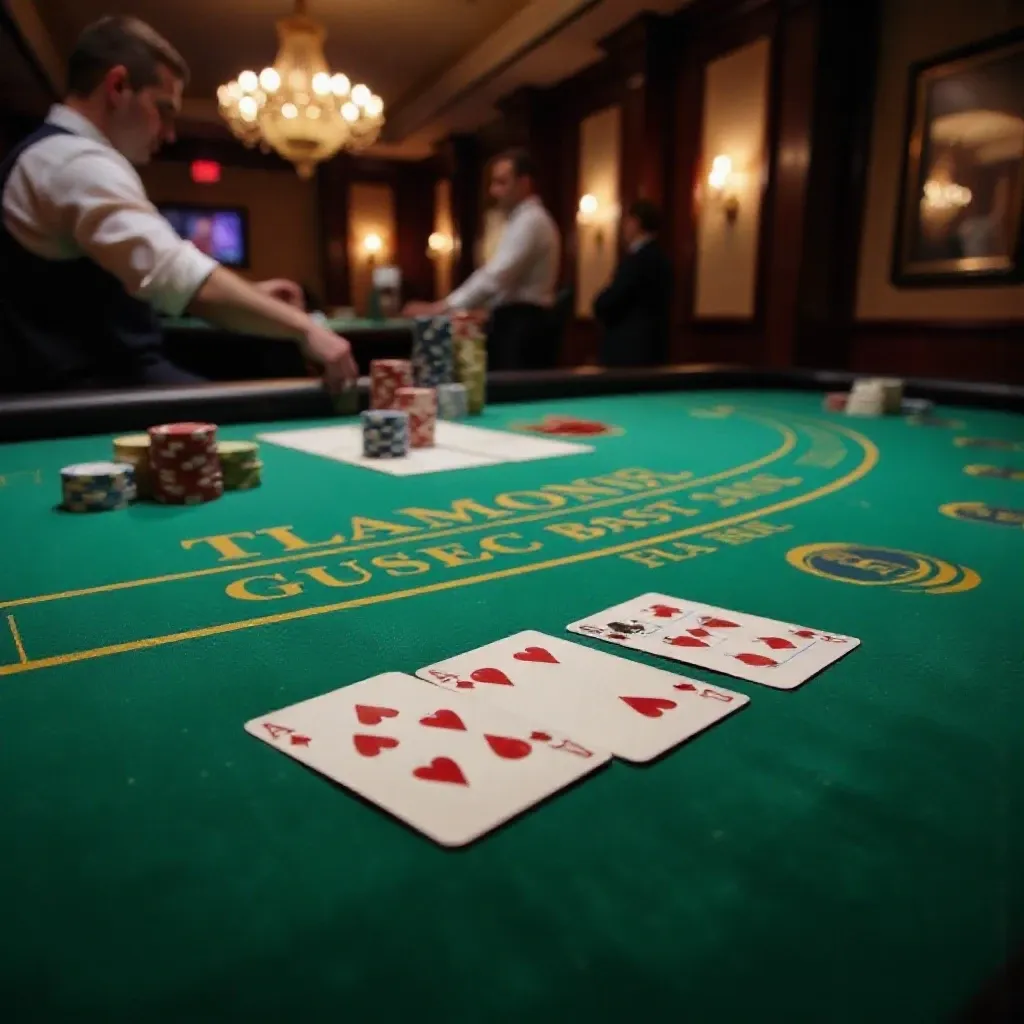
The house edge is a concept all gamblers should understand. It represents the casino’s average profit from a game, expressed as a percentage. It’s the mathematical advantage the casino holds over players, ensuring that, in the long run, the casino will profit. Think of it as the price you pay for the entertainment and the chance to win. The lower the house edge, the better your odds. When considering different casino games it is pertinent to always consider the odds and house edge. Although a player might get lucky, most times the casino is more likely to win. Two terms to remember when dealing with casino games, is “Return To Player (RTP)” and “Expected Value (EV)”. RTP is the percentage of all wagered money that a specific casino game or slot machine is expected to pay back to players over time. EV is a calculation which determines the probable outcome of a play assuming that particular game or play is repeated multiple times. Different casino games have different house edges. For example, a game like blackjack, when played with optimal strategy, offers one of the lowest house edges, sometimes less than 1%. Slots, on the other hand, typically have a higher house edge, ranging from 2% to 15% or even higher. Understanding these differences helps you make informed decisions about which games to play.
Calculating and Interpreting the House Edge
The house edge is essentially the difference between the true odds of winning and the odds the casino pays out. It’s often expressed as a percentage. For example, if a game has a house edge of 5%, the casino expects to retain $5 for every $100 wagered over a long period. Think of it this way: imagine you’re teaching someone about investing. You’d explain that a small fee can eat into their returns over time. The house edge is similar – a seemingly small percentage that significantly impacts your overall results. It’s important to remember that this is an average over many plays; any single session can deviate wildly.
The Impact of Strategy on Reducing the House Edge
While the house edge always exists, you can sometimes minimize it with smart play, especially in games like blackjack and video poker. In blackjack, using basic strategy – a mathematically derived set of rules for hitting, standing, doubling down, and splitting – can dramatically lower the house edge. Players who use the best available strategies might be neck and neck with the house. Video poker offers similar opportunities. By learning the optimal strategy for a specific video poker game, you can often achieve a very low house edge. However, even with perfect strategy, the house still has an edge and winning is NOT guaranteed. Strategy just increases your odds of winning by a certain margin, never guaranteeing victory.
Strategy vs. Luck: Games That Reward Skill and Those That Don’t
In the world of table games, the thrill of the win is often a potent mix of strategic thinking and sheer chance. However, the proportions of this mix vary dramatically from game to game. For those seeking a more reliable path to profit, remember this: skill will always be your best ally. Understanding the difference between skill-based and luck-based games isn’t just about choosing a pastime; it’s about choosing how much control you want over your own fate. Some games offer you the ability to directly impact the outcome through knowledge and calculated decisions, while others leave you almost entirely at the mercy of the draw or the spin. There’s no inherent right or wrong choice – it all boils down to personal preference and risk tolerance.
Mastering the Mind Games of Poker
Poker, at its heart, is a battle of wits. Of course, a lucky card can swing a single hand, but over the long haul, consistent success hinges on a deep understanding of poker strategy, psychology and meticulous bankroll management. I’ve seen players with mediocre hands consistently outmaneuver and outbluff opponents with far superior cards. It’s about reading tells, calculating pot odds, and exploiting weaknesses in your opponent’s game. When you’re up against a skilled player, every decision feels like a high-stakes chess move.
The Randomness of Roulette and Baccarat
Roulette and Baccarat occupy the opposite end of the spectrum. While systems and strategies abound, claiming to increase your odds, the undeniable truth is that these games are driven by randomness. The spin of the Roulette wheel or the deal of the Baccarat cards is governed by chance. I once spent an evening meticulously charting Roulette results, convinced I could identify a pattern. Ultimately, the only thing I learned was the futility of fighting the inevitable randomness. Sometimes luck is not on your side regardless on what you do.
Deep Dive: Variations That Can Make or Break Your Bankroll
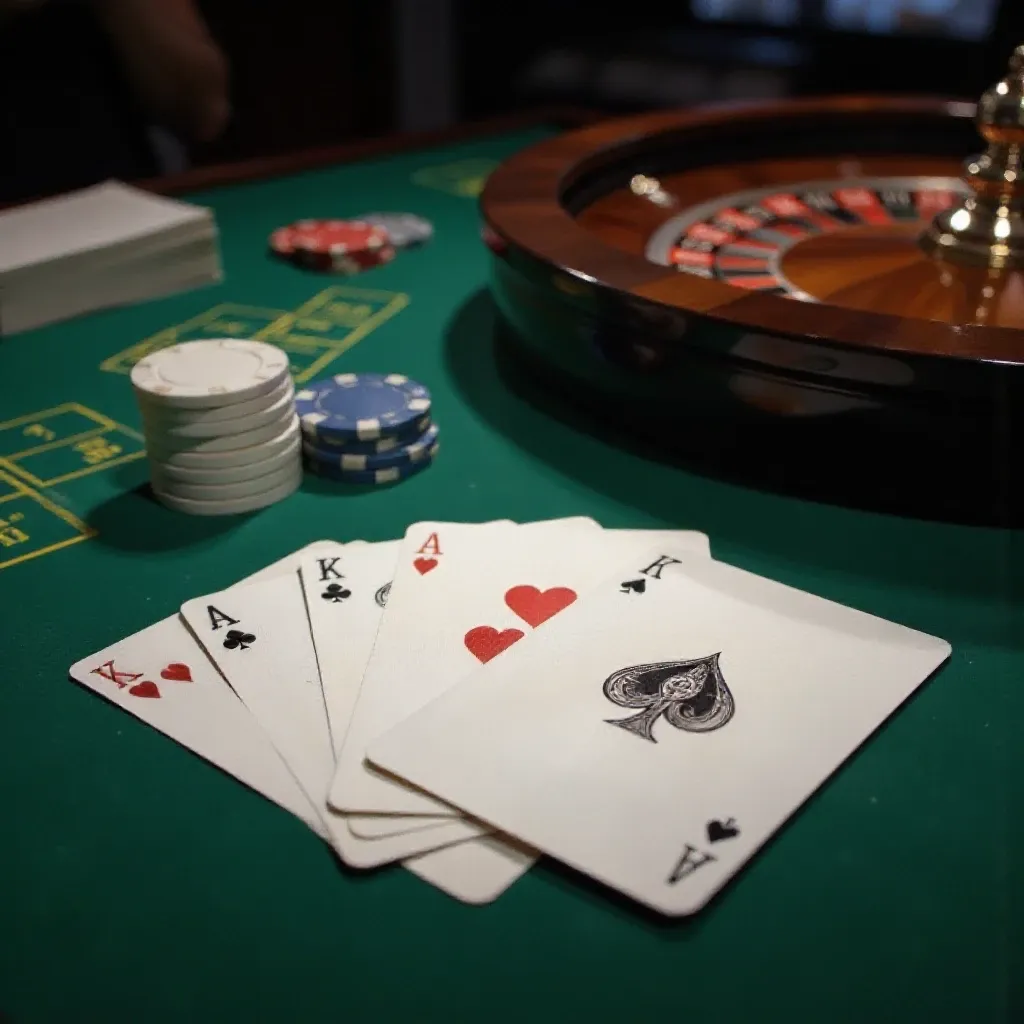
Navigating the world of table games can be tricky. While the core gameplay might seem consistent, subtle rule variations significantly impact your potential winnings. Understanding these nuances is crucial for making informed decisions and maximizing your chances of walking away a winner. Let’s examine some critical distinctions within Blackjack, Roulette and Baccarat that could either boost your bankroll or deplete it faster than you think.
Blackjack Rule Tweaks That Tilt the Odds
Blackjack isn’t a one-size-fits-all game. A seemingly small alteration, like the dealer hitting on a soft 17 (S17 rule), increases the house edge. Similarly, variations in payout for a natural blackjack (6:5 instead of 3:2) drastically reduce your return. The number of decks in play also matters; single or double-deck games often present better odds than those with multiple decks, provided other rules are favorable and your strategy accounts for the changed card count.
Roulette Wheels: Single Zero vs. Double Zero
When it comes to roulette, the choice of wheel is paramount. Opt for European roulette whenever possible. With its single zero, the house edge is significantly lower than in American roulette, which features both a single and a double zero. That extra zero almost doubles the house advantage, making it a far less favorable game for the player. Choosing European roulette significantly improves your odds, so always check the wheel before placing your bets.
Responsible Gaming: Protecting Your Bankroll and Staying in Control
Gambling can be an exciting pastime, but it’s crucial to remember that it should always be approached responsibly. Protecting your bankroll and staying in control are fundamental aspects of enjoying gambling without risking financial or personal well-being. Here are some practical guidelines to help you gamble responsibly:
- Set a Budget: Before you even start playing, decide on a specific amount of money you’re willing to spend. This should be an amount you can afford to lose without impacting your essential expenses.
- Time Limits: Just as important as setting a financial budget is setting a time limit. It’s really easy to lose complete track of time and end up gambling for longer than intended. Once your time is up, stop playing, regardless of whether you’re winning or losing.
- Avoid Chasing Losses: It’s a common trap to try and win back money you’ve lost by gambling more. This can lead to a downward spiral and quickly deplete your bankroll. Accept losses as part of the game and resist the urge to chase them.
- Recognize the Signs: Be aware of the signs of problem gambling, such as gambling more frequently, borrowing money to gamble, or feeling anxious or irritable when not gambling. If you recognize these signs, seek help immediately.
- Treat Gambling as Entertainment, Not a Source of Income: Gambling should be viewed as a form of entertainment, like going to the movies or a sporting event. It should not be relied upon as a way to make money.
Create a Personal Limit For yourself
I am always excited to gamble, but I’m very careful. I always set and stick to my budget. Here’s one of my tricks: I determine how much I want to spend beforehand and withdraw that exact amount in cash. Once the cash is gone, I’m done! No exceptions! Another trick, I set a timer on my phone and when it rings, I stop, no matter if I am winning or losing. Finally, I will never borrow money to gamble. These are my rules, and I always follow them, and you should too! Having a limit isn’t about restricting the fun; it is about ensuring gambling remains a source of entertainment and doesn’t control your life.
Conclusion
Navigating the world of online table games requires a blend of strategic prowess and mindful decision-making. The key lies in understanding the odds, choosing games wisely, and managing bankroll effectively. Remember that mastering casino strategy is not about eliminating risk entirely, but mitigating it through informed choices.
From Blackjack’s calculated card counting to Poker’s psychological depths and Roulette’s probabilities, each game presents a unique challenge and opportunity. Armed with the data-driven insights discussed, players can approach these games with increased confidence and control. Ultimately, responsible gaming is paramount. Setting limits, understanding the risks, and recognizing when to step away are essential for a positive and sustainable experience.
Online table games offer an engaging blend of skill, chance, and strategy. By embracing a calculated approach, players can not only enhance their enjoyment but also foster a deeper appreciation for the games themselves. So, deal yourself in, play smart, and may the odds be ever in your favor!